

Behavioral Science for Policy Lab (BSPL)
The BSPL mission is to put Weber’s previous research insights about the full range of human motivation and human decisions processes into a broader context, looking at decision makers who are imbedded in social networks and their physical and social environment, who receive information and cues from those sources as well as feedback from the effect their decisions have on their environment.
The research conducted at the BSPL examines how psychological, social, and cultural factors shape environmental and climate-related decision-making. The lab investigates misperceptions of social norms, collective behavior dynamics, and the behavioral barriers that impede public support for climate and sustainability policies. BSPL also examines pathways for accelerating sustainable behavior through social tipping processes, response diversity, and shifts in norms and stewardship.
The Behavioral Science for Policy Lab cuts across three academic units at Princeton University: (a.) the Andlinger Center for Energy and the Environment within the School of Engineering, (b.) the Science, Technology, and Environmental Policy Center within the School of Public and International Affairs, and (c.) the Department of Psychology. PhD students, postdocs, and undergraduate researchers come from all three groups and also include international visitors. The physical location of the BSPL is in the Andlinger Center.

Research Areas
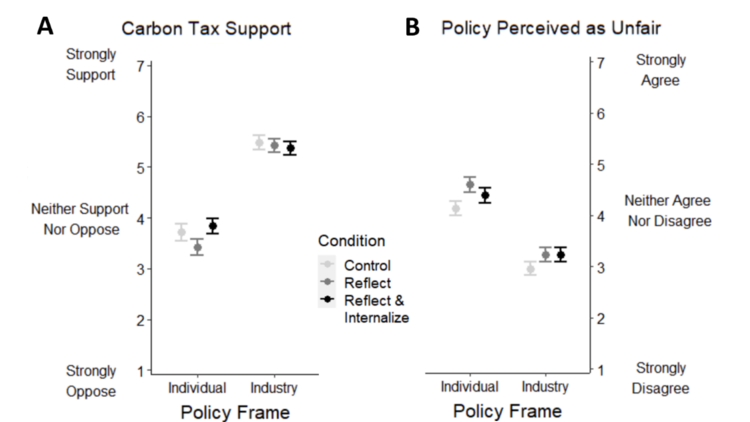
Sparkman, G., Attari, S. Z., & Weber, E. U. (2021). Moderating spillover: Focusing on personal sustainable behavior rarely hinders and can boost climate policy support. Energy Research & Social Science, 78, 102150.
Responses to energy and environmental technology and policy
People’s responses to existing or proposed technologies or energy and environmental policies is not entirely rational. Here we explore the full range of human goals and human processes that shape our responses to environmental change and energy technology transitions with the objective of designing choice environments that facilitate wiser or more rational responses.
Decisions in a social and physical environment
Human decisions, and in particular decisions that impact sustainability and the quality of our natural environment, are made within a social and physical context. Our social networks tell us what others do. Following the norms of our peers confirms social identity and reduces processing costs. Norm violation often has negative social or material consequences, especially in collectivist cultures. What determines the perception of shifts in social norms, and can these dynamics be utilized to accelerate change and create tipping points in behavior?
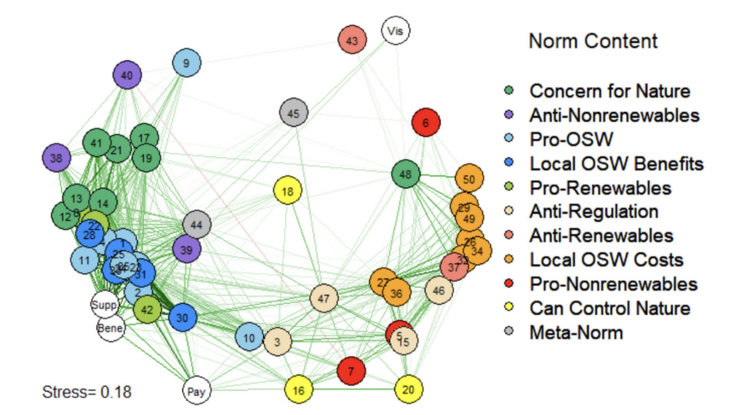
Sparkman, G., & Weber, E. U. (2023). Beyond the single norm: how social perceptions connect in a norm network. Frontiers in Social Psychology, 1, 1302029.
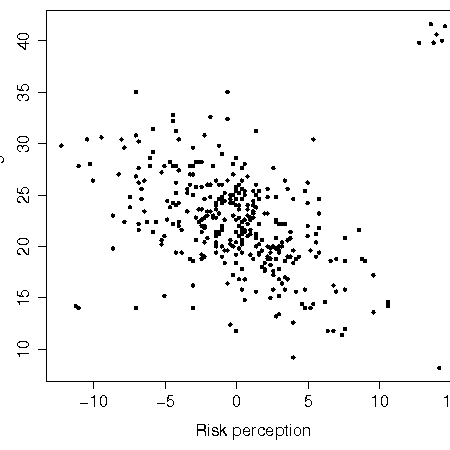
Blais, A-R. and E. U. Weber. 2006. “A Domain-specific Risk-taking (DOSPERT) Scale for Adult Populations.” Judgment and Decision Making, 1, 33-47.
Tools and scale development
Current work extends existing tools to different populations, designs scales to assess important constructs identified in prior work, or develops platforms and software that implements the emerging view of a complex adaptive yet only boundedly-rational decision maker.